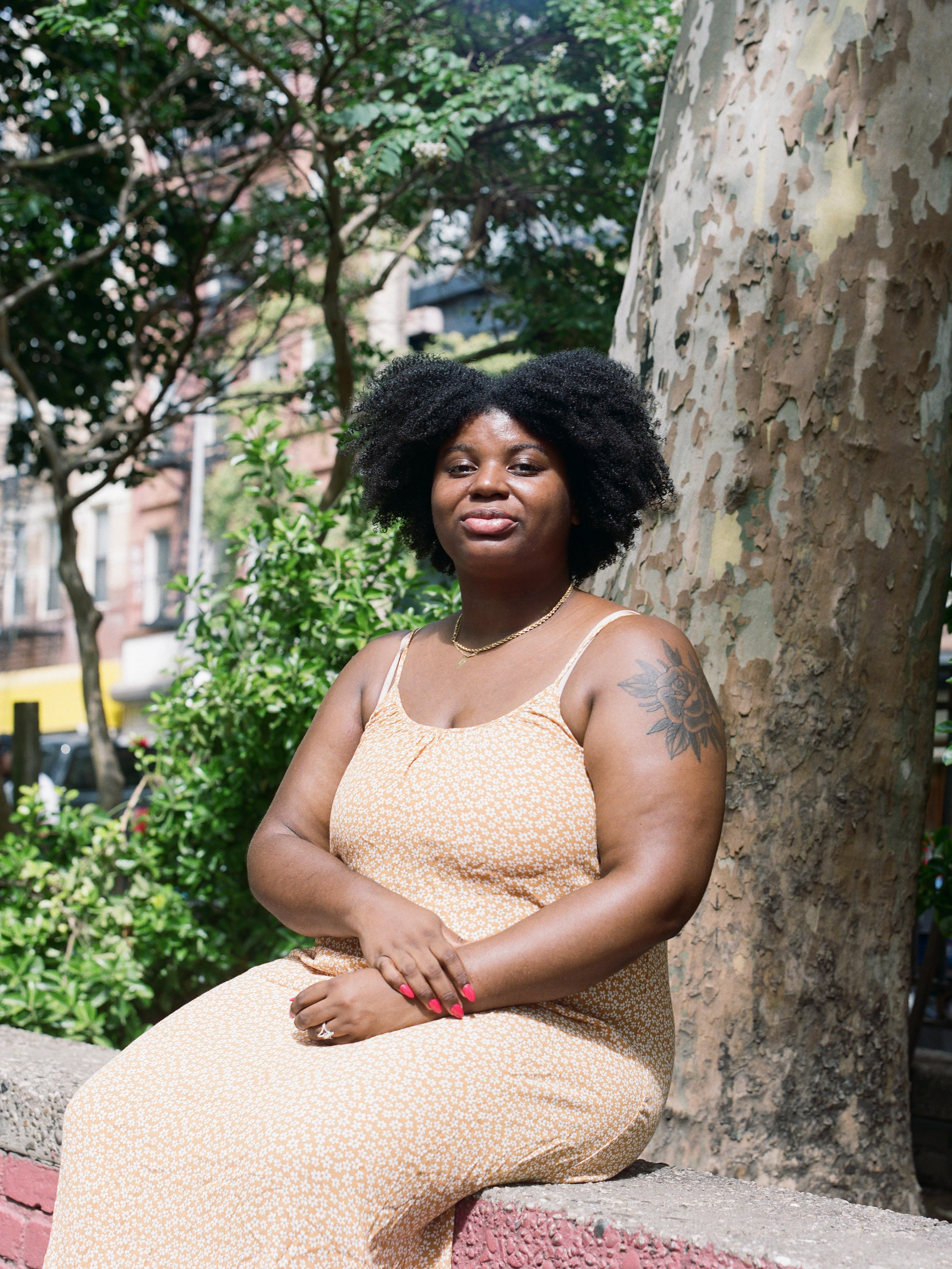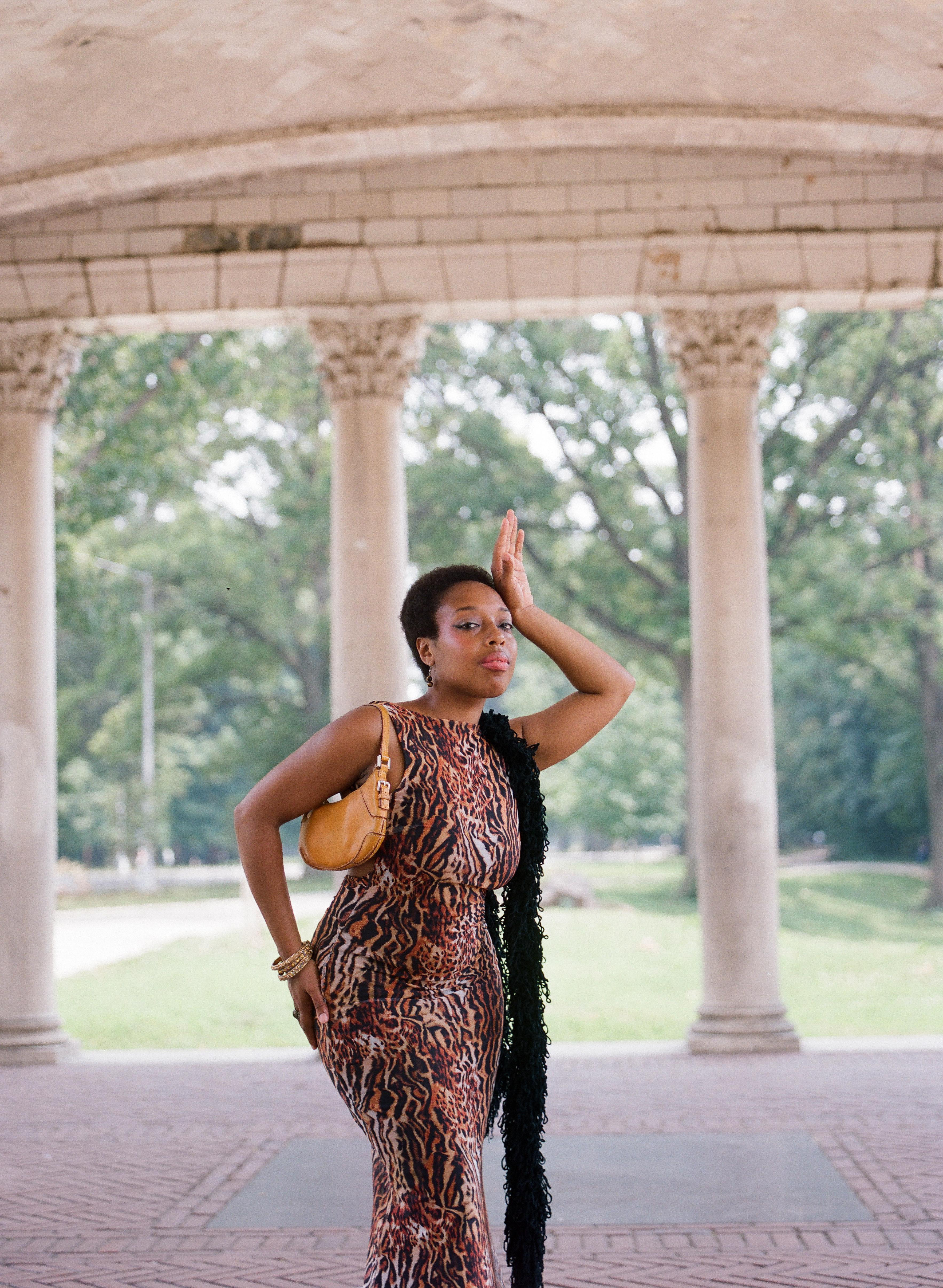
Sasha F. - We're going to start off with, where's your family from?
Zainab F. - So my, on my mother's side, my mother was born and raised in Haiti. In Port-au-Prince. And my father is African American with Southern roots, but he's from the Bronx, born and raised in the Bronx.
Sasha F. - And then you mentioned while we were speaking that you were born in the Bronx, but you grew up in Mount Vernon. How was it growing up in Mount Vernon with the dual identities of like, being the daughter of a Haitian woman and African American father?
Zainab F. - I always, in short, I always say that I was raised in Mount Vernon, but that story is not necessarily completely true because I was born in the Bronx. My family moved from the Bronx to Pennsylvania for upper mobility and to experience like racism. And that experience, it really, I think that it radicalized me. It was the first time that I realized that I am a Black person navigating this world at the age of, I think I was like six years old, five, six or five years old. And then from there, we moved to Saudi Arabia and we lived in Riyadh. And there, I don't remember there being any person of Caribbean descent or any person that identified as Afro-Latino. Yeah, there was like, we were like probably the only family that I could think of. And then coming back to America, we moved to Jersey. And then there were a lot of other Haitian individuals and Dominicans and white Brazilians. I want to make that difference. So there were a lot of-
Sasha F. - Yeah, to clarify that one.
Zainab F. - Yeah, yeah. There were a lot of white Brazilians. Then we moved from there. We moved to Mount Vernon, New York when I was like 13 or 12 years old or so, like when I was entering, whoa, like seventh grade, I moved back to New York. But we moved to a small town called Mount Vernon. And Mount Vernon is really known as a Black suburb. It is a place that was once where a lot of Black professionals had moved there. And it is also a place that is known for a lot of Black revolutionaries. Malcolm X bought a home there. His daughters were raised in Mount Vernon, New York. Nina Simone, she had a beautiful home that sat on a hill and had a beautiful lawn. Her home was incredible. And a lot of them even had offices where the Black Panther Party would convene, particularly in Mount Vernon, New York. So Mount Vernon, New York has a lot of Black revolutionary ties. And growing up in an area where having this dual identity, I felt as if I was a third cultured kid as a child, because I was African American. I am African American. I'm Haitian. And also, too, because during that time, I feel like the term in the early 2010s or early, like late 2008s, the term Afro-Latinidad was not easily embraced. And if it was embraced, it was, Haitians were oftentimes left out of that conversation. And then also, too, the idea of this kind of Blackness of fitting, having looser hair, having lighter skin, but looking like you were a mixed race person, but there's no sense of the Afro, that being a thing. And I think that it began to change in 2015, a lot of, yeah, you know what I mean? So I think that for such a long time, I felt as if I was third cultured. I felt as if I was othered. I was not African American enough for my African American friends and being Haitian as well. I didn't feel as if I was not, I feel like I was more embraced, but it always was, okay, my last name is Floyd. And then my first name is Zainab, which is an Islamic name. Maybe when people think my name's Zainab, they automatically assume that I'm African, West African, because of my name. So yeah, I always felt like I was there, but being an outsider. But it wasn't until I was in college and undergrad. And then that's when I fully just, not that I didn't embrace being African American and Haitian, but that's when I didn't feel confused about my identities.
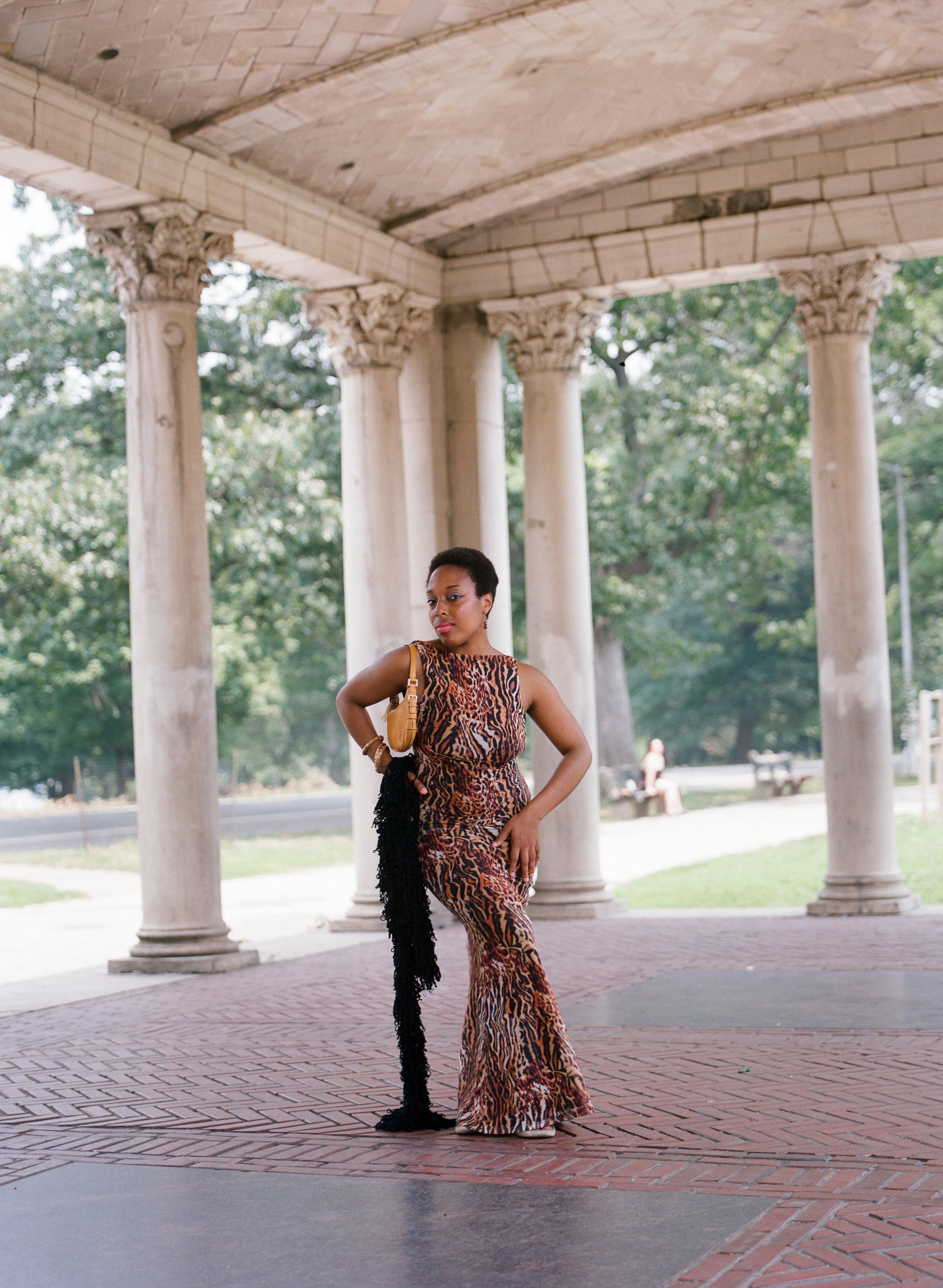
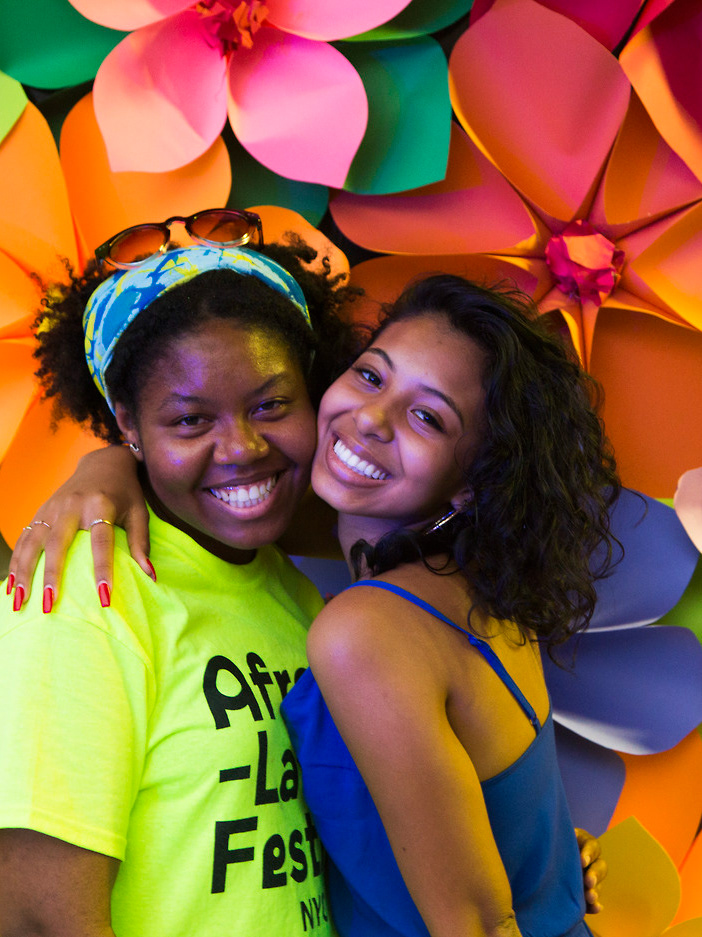
Sasha F. - Yeah. Honestly, I feel like I had a similar feeling in college. In undergrad, my dad is African American and my mother is Panamanian and Afro Costa Rican. So as a child, there was that, am I African American? Am I Panamanian, Costa Rican? And then in college, like you said, was a time where I was like, okay, I'm both. And there's no separating them. It's not like I'm one or the other, I'm both. And I need to emphasize that part of my identity because that mix is what makes me. I'm not pushing to either side.
Zainab F. - Yeah, yeah, exactly.
Sasha F. - Yeah. So honestly, in this first question, we touched on question number four. So we might skip that one. But so what you mentioned that Haitians are not always in the conversation when it comes to Afro-Latino. So what does being Afro-Latino mean specifically to you?
Zainab F. - I mean, geographically, Haiti is part of Afro-Latinidad in general. But I think that Haitians that are part of the diaspora, like Haitians that are Canadian or Haitians that are, well, particularly from the Americas, I feel that they accept this idea of being part of Afro-Latinidad, as opposed to Haitians that are living on the island and also Haitians that have spent majority of their lives on the island and they come to the States. There is a hesitation to defining themselves as that. I would speak to other Haitians that were born and raised in Haiti. It's a different kind of discussion that happens. And I think that being part of the Haitian diaspora, this acceptance of being Afro-Latinx, I can even say that sometimes I really, most times I struggle to define myself as someone that is Afro-Latina. And mainly that is because when I will go into spaces with other individuals that are part of the Afro-Latinidad diaspora, it's like, and what are you doing here? You know what I mean? Or sometimes I will hear the comments, I have this friend of mine who's Dominican and he's a black man through and through. And he said to me, oh Zainab, when are you going to come to DR? And I said, I'm never going to come because y'all be really going in on the Haitians. And then he goes, that's not true, that's not true. He's like, I employ Haitians. And I was just like, oh my God, that's so crazy.
Sasha F. - I don't know if that's the right answer.
Zainab F. - Yeah, yeah. And also too, oddly enough, I would oftentimes find myself in conversations with, and most of my friends growing up have been, are Dominican, Black Dominican individuals. But there was a time where, that's like two years ago or three years ago or so, where I would just have conversations with other Dominican men, like elders. And they'll say things, Haitians are such hard workers and I employ them. And it's just that, and they also too were Black, which I found to be very, very strange because if we are all considered to be a part of the Afro-Latinidad, that kind of language around, oh, Haitians are such hard workers, I employ them, they're really good, hard people, as opposed to just seeing them as a person, they would just be automatically included in this community of Afro-Latinidad, if that makes sense.
Sasha F. - Yeah, yeah. Because years ago I watched a documentary called Death by a Thousand Cuts, and it was focused on the patrol rangers in Dominican Republic who are usually beating up the Haitian men who come into that forest in the middle, trying to take trees to create, I think, coal. And there was a Haitian man who ended up killing one of the rangers. And you see how the Haitian community on the other side of the forest protects him. And you also see that this ranger who was vile and violent towards Haitian men who are coming into this forest, had an undocumented Haitian baby mama.
Zainab F. - Exactly. Like, it's crazy, it's crazy.
Sasha F. - But you enact all this violence on Haitian men, so much so that this man takes and kills you but you have a Haitian baby mama. Like, make it make sense.
Zainab F. - Make it make sense, that part, that part, yeah.
Sasha F. - Okay, so the next question kind of riffs off of this last question, is like, how do you feel like you're taking up space in the Afro-Latino community?
Zainab F. - I don't feel like I'm taking up space. I feel that maybe, like, in my early 20s, especially when I was an undergrad, I would participate in a lot of, like, protests. And, or I would join a lot of groups or all these things that were happening on my campus at NYU. Or I would join, like, organizations that were in collaboration with Dominicans that, because they have to do the work fighting their anti-Haitian ideology that, like, they have to, like, you know, chip away and that Haitians don't have. I think, I wouldn't say that I'm someone that is taking up space. I wouldn't define myself as that. I would say, like, maybe, like, I'm there, but I'm not taking up the room or, like, all those things, if that makes any sense.
Sasha F. - That makes sense. That makes sense. The next question was about navigating your dual identities, but we kind of touched on that earlier, so I think we can just pass that one. Um, so this next question, it's broad between historical figures or significant person, like a family member. So is there an Afro-Latino historical figure or significant person, dead or alive, that you would want to have dinner with and why?
Zainab F. - There is a freedom fighter by the name of Cecile Fatima. Um, she is a Haitian. Well, she's considered to be Haitian, and she was one of the individuals that, um, led the rebellion. There were multiple rebellions that took place in Haiti. Some say, like, over the course of 10 years, this, when the last rebellion was the one that emancipated Haiti. But I would have loved to sit down with her and, and, and speak with her, um, about the ways that she decided not, I mean, it was, I don't think it was really a decision. It really was life or death. Um, we're either going to be free or just, you know, just die. So I probably would want to have sat down with her and spoken with her. And other individuals, I mean, I would like to define, like my mom, she really is someone that, she's very private, she has her own life and that, and that's just her solely. But yeah, I would love to sit, my mom, she's still alive. Thank God. Sit down with her and speak with her more. I also would love to sit down with a lot of the Haitian women that are named and unnamed who have played such an important role in the Haitian revolution. Particularly, how they have taken that and brought it across Latin America and brought it across the Caribbean and into North America as well. I would love to sit down with them and be like, okay, we need to like, cause there are movements that are happening, but it's not as fierce as it once was. Because you know, we are living in such, we're living in such a world.
Sasha F. - Yeah, we're living in tumultuous times.
Zainab F. - I'm telling you, I'm telling you. So I would love, cause you know, there's so much stuff that's in the, that's in the archive and there's so much stuff that's in writing. But there's also too, there's, there's stuff that's left out. There's stuff that's, you know, that we can't recover. We kind of have to fill in the blanks. Like Sadia Hartman said something that was really incredible about the archive. It's like, she's filling in the blanks for things that she can't, I'm like, I'm paraphrasing it terribly, but things in the archive that the silences in the archive. So yeah, I would, I would love to sit down with them. That would be incredible. That would be a dream come true.
Sasha F. - Yeah. One of the things that I end up doing during the interviews is based on our conversation. I throw in little ringer questions. So you mentioned before our interview that you're an archivist. So what brought you to this career and did your background of being Haitian and African-American kind of play a part in choosing this career?
Zainab F. - So I think I never, it's crazy because I've never described myself as an archivist. Like people just started defining me as that because I started this curatorial project called Caribbean archive. And it began as me collecting videos, um, letters, images, books, and then posting it on Instagram. And a lot of the reason why I was doing that was because I was collecting, um, all of these things for my colloquium to present when I was in undergraduate school, as an undergraduate student, my bad. And, yeah, so like Caribbean archive began like that. And then people were like, oh, archivist. I'm like, oh, that's really interesting. That sounds really fancy. But I think that being Caribbean, um, it was important for me to collect things that continue to highlight, Black Caribbean women and femmes that were creating a scholarship of work that is representative of agency and resistance. Because at the time that I started, it was really difficult to find anything on, let alone if you want to find someone that is Afro-Latina, it's impossible to find someone that is just Black period from the Caribbean and a woman that was creating just incredible work just in one place. Now, thankfully there's so many avenues that you can find that kind of information, but in the beginning it was nearly impossible, like, or even trying to find scholarly articles that named Black Caribbean women. So yeah, that kind of work started there. But like, I guess as Black people, like we are archivists, we're always, you know, having a clutter of things that goes back to, to our history or all the things like, and also like, I'm a very nosy person, so it's very fitting for me to, to be an archivist. But yeah, I feel like being an archivist, having that as a career is like the first time I would say, because it's relatively new for me as a career. I think I was like an archivist, like collecting things and like, you know, building programs, around an archive. But having it as a career is relatively new. But I've always been doing that thing. But being Haitian, that foundation made me want to look more into my history and my culture and like thinking of the things that Haitian women have done collectively, that we all benefit from because we're, we're somewhat free, you know? I mean, yeah, we're somewhat free. Yeah.
Sasha F. - So our next question, I want to clarify for Haiti, is the official language like Haitian Creole or French?
Zainab F. - When you look it up, they say the official language is French, but most Haitian people speak Haitian Creole. Yeah, I would say it's Haitian Creole.
Sasha F. - Okay. So my question, now that I've framed that, what is your relationship to the languages of Haitian Creole and French?
Zainab F. - would say, so in my household, like we mostly spoke English in our household. And I'm not fluent in Haitian Creole. I'm not fluent in French at all. Like, I mean, if I go to a French speaking country and like, I'm completely alone, like I can get by from point A to point Z, I can like have somewhat of a conversation. But if I were to be, because I tried it in Haiti, like to speak like the little words that I collected and it was just like, and one thing about being Haitian is that there's a lot of shame around not speaking Haitian Creole. And people are very angry at you. Like when you say, Oh, I don't speak Haitian, I don't speak Creole. And they're extremely angry at you. And it's like this idea, like, Oh, that, I guess like the equivalent of like, Oh, you hate yourself. Like you don't.
Sasha F. - It's like, how dare you not learn a language that you weren't, I'm not born in a country where that's the primary language. How dare you not learn the language of your family's history? Similar to the No Sabo kids for the Spanish language. I have cousins who just can't speak Spanish. And it seems like sometimes my family members are frustrated by them, but I'm like, if you didn't give them the tools to speak Spanish when they were young, now they can't speak Spanish. Why get frustrated at them now? Why didn't you help them when they were younger?
Zainab F. - Yeah. Yeah. That part, that part. And I think a lot of the reasons why, cause it's not, cause also too, if you, if you were to speak to another Haitian person, you say, Oh, but I speak French. It's literally a slap in the face because French is a language that was forced upon us and Haitian Creole. Creole is a language that was birthed out of every revolution. It is, it is our pride and joy and it's our culture. And if we even going back to like in the eighties, when a lot of Haitians were where they were accused of having AIDS, cause you know, the, the, the Hs stood for like one of the Hs stood for, you know, being Haitian. So I think with that history of like the shame thing, and I think like circled around now, like a lot of Haitians are very prideful, like Haitians are the one most prideful people in the world in general, I feel that way. But to say as a Haitian person, Oh, I don't speak Creole. And if I were to say, Oh, I speak French. It's like, that's like bitch really like, you don't understand how hard we got to this point, but I understand. I understand their frustration. Like I get it. That's real.
Sasha F. - Yeah. Yeah. So now we're coming up on the end of the interview. Our final question is, and this to preface it, this is, we're not, I'm not asking you to give a canned answer. I just want something realistic from your perspective. Now, that's my preface. Our last question is, what is the legacy you would like to leave?
Zainab F. - And it's funny. I don't even think about legacy. Like, like once I'm dead, I'm like, I can't, I'm dead.
Sasha F. - Like, I knew, like, I knew it was going to be kind of like a wrench question. So I was like, let me get people at the end.
Zainab F. - I don't, I'm not really much concerned about my, my legacy. What I would want to leave behind or is to continue the work of this lineage of freedom fighters that I come from. And like, there's this woman, I listened to her speak and I'm forgetting her name and I see her face so clearly, but she said, you know, there's a train, there's a freedom train. You're either going to get on that train or you just kind of like go on the sidelines. And I just want to continue to build onto that train. And I hope that when I'm gone, that whatever resources or tools that I have left on this earth, that individuals after me will continue to build onto that work. Because ultimately I'm always thinking about ways that we can get free. What are the things that we can do collectively to be liberated from this oppressive system that we find ourselves functioning in? It's just like, it's just like a rat. A rat race.
Sasha F. - Yeah, a rat race.
Zainab F. - Yes, a rat race. Yeah, I would, I would hope that. And I would hope that whatever I would lead, that it could build onto this long syllabus that we have had since the conception of America that we know it to be. Because there have been so many freedom fighters. And when I mean America, I'm considering the entire Americas. Freedom fighters that have rebelled and that have liberated themselves either through death or either through learning how to read or either through language and dance and song. I hope that whatever I leave, that it could be a part of cracking that code for us to get free.
Sasha F. - And that, I feel like you said you don't, you're not concerned with legacy, but everything you just said leaves an impression. I just wanted to let you know, you do have a vision of your legacy.