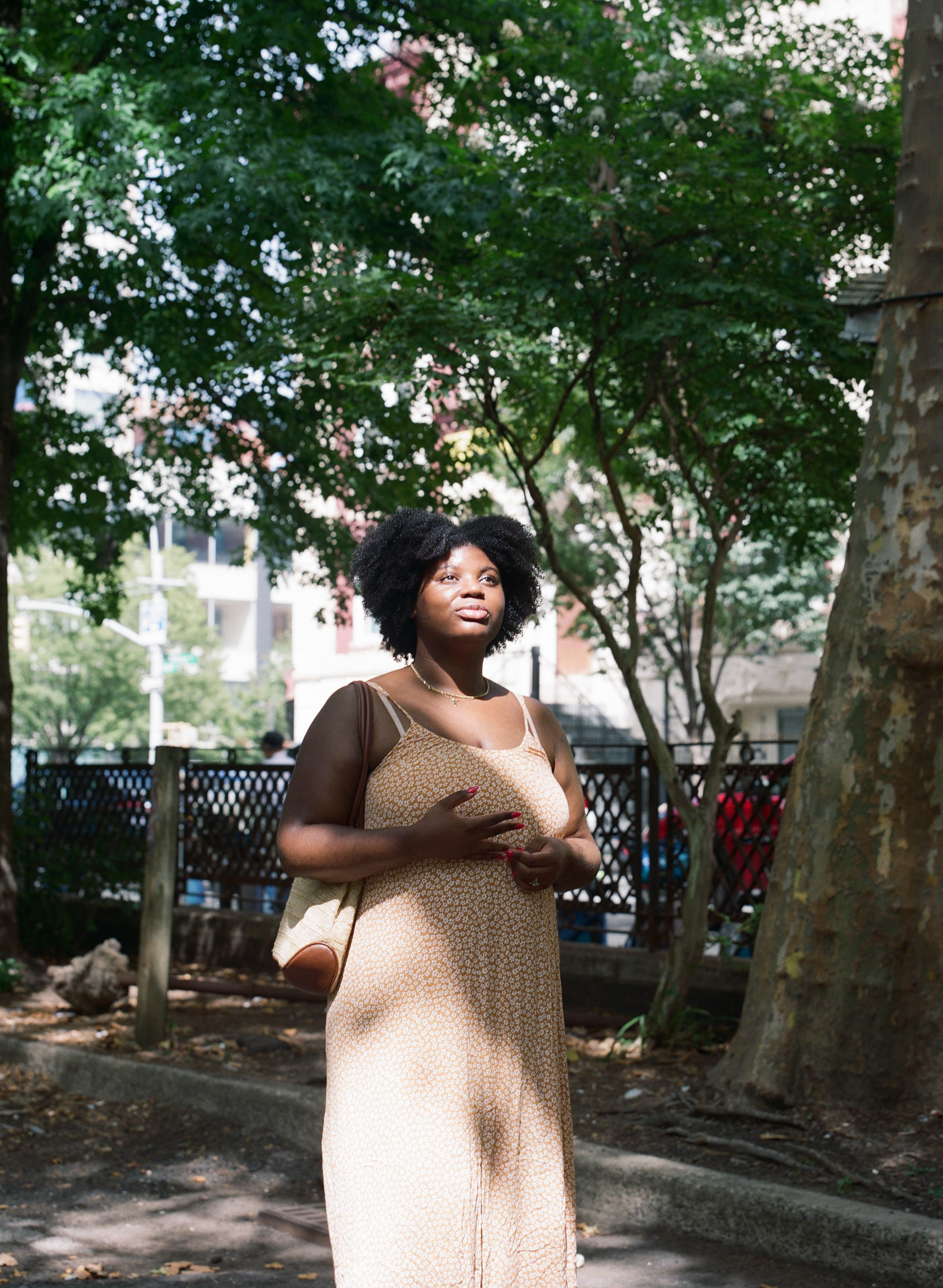
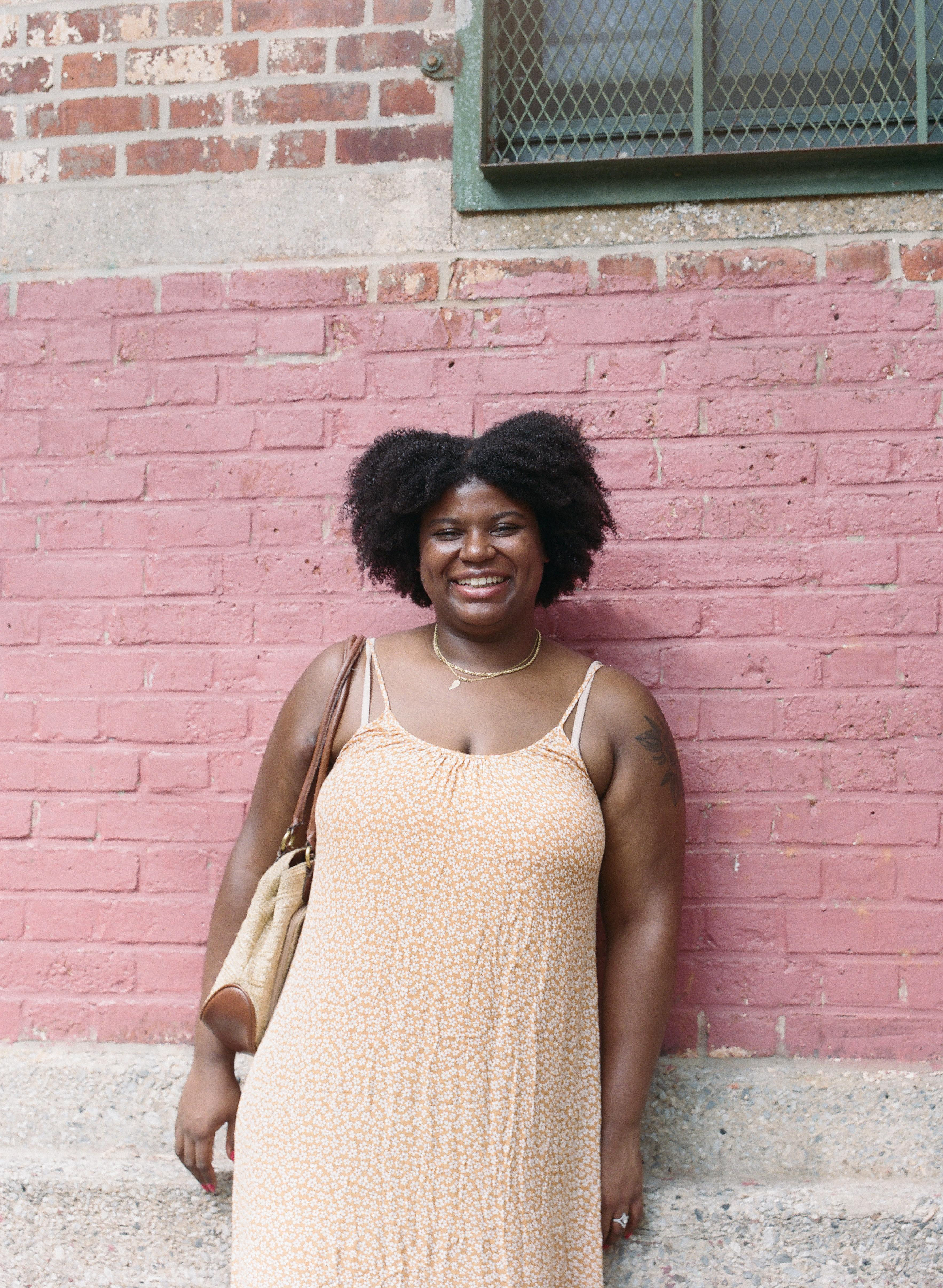
Interview with Melody
Sasha F: Where is your family from?
Melody P: Both my mom and my dad are from the Dominican Republic. My mom's family grew up in Santo Domingo and then my dad's family is from San Cristobal.
Sasha F: Where are you from in the United States?
Melody P: I was born in the Bronx, and then I spent most of my life in New Jersey.
Sasha F: How was the transition between Bronx to Jersey?
Melody P: Well, for me, I didn't remember any of it. I was a baby. Oh, really young. Um, but my, for my family, it was interesting because I'm the youngest of four. So my siblings had a full Bronx childhood, we lived on Cedric Ave, and, um, then they had to acclimate to living in the suburbs, and that was more of a shock for them. For me, my whole life was Jersey. We would only go to the Bronx on the weekends to see my Abuela or my or my Titi, they both still live in the Bronx. So, yeah.
Sasha F: What is being Afrolatino, you know, mean to you?
Melody P: I think I think it means being comfortable with a certain level of duality, but also stepping back a little bit. Um, like not feeling a level of ownership to maybe like Black American culture, African-American culture, and being able to indulge in all the things that make our island great or our countries and cultures great while still being really proud of everything that makes you Black. I think it's a, I was very lucky to grow up in a household where I was never told I wasn't Black. I was never told to not be proud of being Black. I was never told to hide any aspects of myself that were Black. And I know that's an experience that a lot of Afro Latinas can have. Um, I was very, both of my parents are Black Dominican people, and they were not, they didn't shy away from that fact. So I was very lucky to have that upbringing.
Sasha F: So you mentioned that you grew up to embrace your blackness. You were not made to, like, feel lesser about your life.
Melody P: Yeah.
Sasha F: What are ways that currently you take up space in the Afrolatino community?
Melody P: I think for me, it's important to, I'm an immigration attorney, so being kind of a face of comfort to my clients, in which a lot of them themselves are Afro Latino, and did not expect to have like a fellow Black person being the one who represents them through such a violent process. Just making sure to, again, like not really couch or hide any of any aspects of myself, like wearing my natural hair and, um, making sure to, yeah, just be proud of my skin, everything that makes me, uh, makes me Black, like not hiding that. I feel like it's very common, like the act of like bleaching in our communities or derisado and like straightening your hair. Um, kind of pushing against that so that there is never a gray area. You know?
Sasha F: It was interesting because when I was younger, it was the Dominican community that I interacted with…
Melody P: Don't get me started with that.
Sasha F: That gave me my derisado.
Melody P: Don't get me started with that. Don't get me started with the... with the, I no Black, I Dominican, don't get me started with that because I actually will... I could talk about that all day. I really hate that.
Sasha F: I'm gonna take a little riff off the original questions that you’re an immigration attorney. What led you to that career?
Melody P: So I went to law school to be a criminal attorney because I had experience with family members who had to interact with the justice system. And then I went to law school and I hated criminal law class. I was like, this, I really don't want to do this. And I was a part of a multicultural student program at my law school, Rutgers Law School, and they allow you to pick a nonprofit organization or any legal organization to work for your 1st summer. As kind of like a jumping off point for multicultural students. And I got to work for Make the Road in New Jersey for my 1st year in law school, and I loved the work so much. It felt like I was still helping people and contributing to a community without having to do criminal law, which I really didn't like. And that kind of led to a career in immigration law all throughout my time in law school, and now I work with trafficking survivors in New Jersey, providing them with immigration support.
Sasha F: That's, like, a mix of, you know, Afro Latinidad and mix of caring for the community.
Melody P: Yeah, no, it's funny. A lot of people, when they hear that, they assume that like my family had like some form of, but I had no interaction with the immigration system growing up as a child. Like, by the time I was sentient, all of my family, like kind of had their papers together. So I was very blessed to not be in a mixed status family. Um, and so it really came out random. It came out random, and then just happening to know Spanish just kind of kind of built into that. But I always say that, like, it's kind of weird that I feel like I had, like, a Black... I had a primarily Black childhood, and then my mom wasn't super focused on us learning Spanish, and I didn't have like my connection to my Latino friends wasn't through Latinidad. It was through, like, just being, like, being at school together. You know, I don't, when people talk about like the certain aspects of growing up in a Latino households, I didn't really have that. My mom very, like, was very, like, focused on raising us. I feel almost like just that Black, young Black children in America, very, very specific. I learned Spanish in high school and in college like any of my peers.
Sasha F: My Spanish a little shaky, but I primarily learned Spanish from my family, not like them teaching me. I was just eavesdropping on people.
Melody P: Nosiness is a skill.
Sasha F: We kind of touched on this a bit already. How do you feel about that concept of Ni de Aquí, Ni de Allá? How do you navigate dual identities?
Melody P: It's tough because when we go back to DR there is this, uh, When Dominican people say that they're like, when when the making people try to act like racial dynamics don't exist there, I always like roll my eyes because that's just that's just not true, right? Like, it exists there and it's really, like, palpable. Especially recently with everything that's happening between the Dominican Republic and Haiti. And so you can't help but feel that, but then also, it's like, um... Here, growing up, I remember not feeling Latino enough for the Latino kids that I grew up with, and that's why I didn't really, I wasn't really in community with them. My mom was still insistent on me representing my culture. Like, we would have diversity day, and she would insist on putting me in the, like, the, you know, El Vestido de la Bandera, and, like, making me pastelitos to take the school and stuff, like, she was very insistent on that. But I definitely distinctly remember being told by kids other Latino kids that I was not Latino. Um, because I didn't speak Spanish. And also because I was black, you know, like, I didn't I didn't grow up going to school with, uh, other AfroLatino kids.
Sasha F: Yeah. It's I feel like it's also a part of like where you were and New Jersey kind of played all part of it.
Melody P: Yeah.
Sasha F: Because I feel like in New York City, there's a lot more pockets than like Afrolatino, you know, communities. I didn't grow up in one, but I know.
Melody P: Yeah. My, the Latino community where I grew up was mainly Colombian. Like white Colombian kids. That's what I grew up around. So it was a huge disconnect for me, where it was, like, the Latino community was strong, but then the Afro Latino community was small. And then, just about where I was graduating high school, 2016, 2015, I feel like, you remember this era where, like, Afro Latinidad really started to become this, like, thing that was cool? You know what I'm saying? And then, like, I had kids I was growing up with who, like, never referred to themselves as Black, a day in their lives, were now, like Afro Latino, and, like... Oh, very much. Wearing dashikis and stuff.
Sasha F: I remember that. But the thing is, I feel like in that era is when... like more Mestizo, so or White Latinos, were suddenly like, I got a Black grandma, so I'm an Afro Latino.
Melody P: Yeah, yeah.
Sasha F: And it's like, okay, you’re wearing a dashiki.
Melody P: You're frightening me.
Sasha F: You out here trying to act like a little curl to your hair. Is going to make you..
Melody P: Yeah, Oh my god. Gel sales, like, went up 20 million.
Sasha F: Yeah, and my thing is like come on. I feel like I feel like, you know, there's a difference between having a family who's Black and being Black yourself. There was an author on social media who blocked me because I said, just being having a little curl in your hair, don’t mean you Afro Latino. I don't think she liked that. I found out she blocked me on TikTok and Instagram. I'm not even going to mention her name.
Melody P: Wait, I kind of wanted, when we're done, you gotta tell me.
Sasha F: Literally, I was like, I've never read a book by her ever. I never even read any of them. I was like, now I'm really not going to start.
Melody P: No, I'm strict about that. I’m strict about that and people are always kind of like, No, for real. Like, yeah, I walked around like, you couldn't, you can't decide. You can’t wake up one day and you're like, I think I'm Black now. No, no, that's not how that works. You know, like as someone who had to grow up, like there was no like, shifting away from my Blackness. It's like, that's, I'm sorry, like, that's my standard. Someone needs to be able to look at you. Like, that's a Black person.
Sasha F: Like, you have to be racialized…
Melody P: Exactly. Yes.
Sasha F: Racialized as Black to be Afro Latino.
Melody P: Yes, you can't just wake up one day. No, I don't like that.
Sasha F: You can’t be like I got some gel now I got a little curl. I’m gonna wear a dashiki today.
Melody P: Right. I really grew up with a boy who was just like that, and he meant well. He meant well. So, I, you know, I say it with a level of lightness, but I just, I'll never forget, like, one day you just pulled up, and I was like, I know you're not, are you being serious right now? And he was, he was. He was being completely serious. He's like, yeah, Mel, Afro Latinidad, like, Sister.
Sasha F: Like the fist up and everything. So our next question is, is there an Afro Latino at, you know, historical figure or significant person, alive or dead, that you would want to have dinner with and why? It could be anybody. And as I said, alive or dead. Like... I know it's a hard one. It can be celebrity, it can be just a family member that you think of, like, anybody.
Melody P: It would be my great grandmother, and it's because she, every story I hear about her, she was just like extremely hard. Like, just the realist alive, you know? Like, uh, when the United States invaded DR in the 60s, and we lived in Santo Domingo, my family used to say that she used to, like, put all the kids in, like, one of these closets lined with pillows, and she had, like, a machine gun by the door. She was just like the realest... She was so and yeah, exactly. Um, and there was a period before they lived in Santo Domingo, where they lived in El Campo, and my mom tells the most fondest, like the most fun stories of that time. I would love to sit down and talk to her.
Sasha F: What is something that you would love to ask her during that time?
Melody P: I want to know her politics. I tried to investigate my Tío Pablo's politic, because he actually was, like, a part of the little groups of men who were, like, resisting U.S. imperialism during the '60s, but he's so much older now like, I can't keep him on track for a conversation. But as someone who considers herself to have very radical politics, especially out of everyone in my family, that's what I would want to know. Like, I would want to really get into, like, how did experiencing something like that affect her politics? Because I feel like I literally tell my mom this, I'm like, I feel like she would be more in line with me than many of you may think.
Sasha F: Yeah, the funny thing I've really, like, looking at it, I feel like sometimes when you speak to, like, an Afro Latino, like, you know, elder, about politics, they might be a little more conservative, but then they was doing the most radical things. And then it's like, how you been doing this?
Melody P: It's just social conservatism that comes from, I think, like, religion, obviously, and just, like, um, upbringing, but then when it gets to, like, colonialism and economics, that's when it, that's when like…
Sasha F: That's when there's a shift.
Melody P: Yeah, your Titi turns into Marx you know?
Sasha F: So the next question, what is your relationship to your colonized language? So like at this point, we know it's Spanish.
Melody P: Yes
Sasha F: So what is like, how did your relationship with Spanish develop because you mention that when you were younger, you didn't really speak it and you learned it as you got older?
Melody P: Yeah, um, I, my mom was not keen on... Well, one, she didn't have the time. My mom was a teacher and, uh, like an outside special needs professional. My mom worked like 12-13 hour days, Monday through Friday. She did not have time to sit there and teach Spanish. And, um, she just kind of thought of it as like, no, just go to school and learn English and be like that, you know? My mom herself spent a lot of time in the United States, only spent her childhood in the Dominican Republic, so she wasn't keen on it, you know? And then, in high school, I remember I chose to teach to learn French instead of Spanish, because I was like, one day, I'm gonna move to France. And so I need to learn French. And then when I got to college, I was like, what am I doing? So I minored in Spanish. I was like, why am I, why am I learning French? This is stupid. So, I decided to minor in Spanish, and that's how I started learning Spanish. I lived in Spain for 6 months due to that Spanish minor.
Sasha F: Like an educational program?
Melody P: Studying abroad, yeah. And then, uh, then after that in law school, it's just all from my work. All of my, like, all of my knowledge of Spanish barely comes from my undergrad education and it comes from speaking to my clients every day. Yeah and so it's funny, like, it's kind of like a winding road to it and I see Spanish now as more of like a tool for my work than, like, something to connect to my family with. I remember my grandmother passed away recently and she was, but I'm happy that she was living for me to be able to communicate with her more and talk with her more in Spanish, she was my grandmother, never, and almost insistent of never learning English.
Sasha F: My grandmother can barely speak English.
Melody P: Yeah, and so I'm happy I was able to kind of have conversations with her before she passed away. Because of that, you know?
Sasha F: I love to bring up little pieces of what we speak about in an interview. So you mentioned you spent 6 months in Spain. So how did that inform your understanding about your life and the Spanish language?
Melody P: Yes, because, um, Spaniards are very particular about, uh, As suppose the hierarchies they put Spanish, other Spanish speaking countries into? Um, and also, being there, and having being able to, I don't know how to explain this, I had, I didn't have the same grasp of Spanish, but I was able to speak Spanish more loosely because I was just replicating what I heard growing up. So I was able to speak Spanish with like a speed and a cadence and a casualness, despite the fact that my classmates knew more Spanish than I did, because they cared more about Spanish class than I did. And, um, so that made it really interesting to, like, go out. I always noticed that when I had a little bit to drink, I was able to flow things a little easier. I don't know if that was like a muscle memory thing. Um, and then living there, I, one instance that came to mind was that I had to get my hair braided because I was like, the braids I came there with, I was like, I look, the, yeah, the new growth was really making its opinion known, and I was like, I need to, these need to go. So I sat there and my homestay mom was like, what are you doing in your room? Because I have to sit in my room for, like, six hours undoing my braids. And then I went to a, um, I went and looked through Spanish Instagram for a hair braider, and I found a hair braider in this, like, small, uh, community in Madrid that was mainly made up of, like, Afro Latino, Dominican, like a Dominican woman braided my hair while I was there. And I remember I went and I told the classmate, like, yeah, I got my hair braided. The name of the neighborhood is absolutely going over my head right now, but it's known for having like, um, Afro Latino communities in it and being like rough and tumble And I remember one of my...
Sasha F: It’s always the Black communities that are rough and tumble.
Melody P: Right. And I remember one of my classmates was like, you went there? Like, Oh my God. And I was like, this regular neighborhood? Like, what are you talking about? It's like literally on the subway line. You would have thought I went to like the Badlands the way she was talking about it. And I was like, I had a Tres Golpe. I got my hair done. It was paradise. I don't know what else you want me to say. But she was extremely shocked that I had gone into this like, this horrible neighborhood to get my hair braided. So it was still this feeling of being, um, racialized, and if anything, I felt a difference in treatment when people knew I was Afro Latino versus people just thinking I was a Black American woman studying. Very strange, like, I found that it was like, I don't know how to explain it, like a disregard once they found out I was Dominican and heard the way I spoke Spanish versus when they thought you were American, who didn't speak any Spanish and had no connection to their language or anything.
Sasha F: What is the legacy you want to leave? And I think this kind of plays into a little bit of your career.
Melody P: Oh, yes. I think I want to be remembered by my clients as someone who didn't disregard what they went through, who didn't itemize what they went through. Um, that's a very easy thing to occur in immigration because that's what the U.S. government is doing today. They're itemizing and scaling the pain they went through. And I think I pride myself on, like, seeing my clients as whole people. And I'm married to an Iranian person, that's my spouse. So, like, our kids will not have a Latino last name. My spouse goes on Duolingo, okay? But, you know, like, they'll probably end up learning Spanish the same way I learned Spanish, you know? And I think as I'm getting to the age where we're thinking about having kids, I want my kids to be really, really proud of... like the wholeness of their identity and how complex their identity is and the history of their identity. Like how they got to a point where they would be like a, yeah, half Afro Dominican, half Iranian person you know, and all the history that comes with that and all the, you know, maybe pushback and difficulties they may face because of that identity. I think I’ll be a very, I guess, honest Mom. Maybe that's the culmination of my very long winded answer.
Sasha F: No, that's all right, because I'm gonna transcribe the whole thing.
Melody P: I want to be remembered as an honest and holistic person.
Sasha F: Yeah. Like, speaks to as I've talked to you who you are and who I have to come to see.
Melody P: Oh, thank you. I think, just like, I guess a final point being that, I feel like, We're in this weird space with identity, where disingenuousness, or... There was a time where I feel like disingenuousness was almost preferred because you needed the representation. And so you needed to sell a story about your life. And sell a story about how you got to X, Y, Z. So you could sell the book. So you could sell the show. So you could sell the interview. Um, And I feel like we're kind of, we're going past that in a way that I think leaves room for a lot of... nuanced, honest, and holistic representations of who we are, and who we have to be remembered as, right? Like, you don't, I can be all of these things. Like an AfroLatina lawyer, but like my, that doesn't mean that you should be able to predict everything else I'm about to tell you about my life because it's not formulaic and we don't have to be put in these like almost like novel boxes.
Sasha F: Yeah, because... Especially in today’s, like... climate where everyone that is a brand. Everybody's trying like not everybody, but a lot of people out there representing themselves on social media as a certain type person.
Melody P: Right
Sasha F: It's harder to quantify with people who are just like, I'm here. You can't just quantify me as like a certain box just because because of the stereotypes people are peddling on social media.
Melody P: Right, and because it's not it's that's never how it actually works, right?Yeah. And, um, that's super exhausting because it's almost just neat to sell yourself constantly and justify your existence. When you asked me that question of like what your legacy is, I had to like really chew in my mouth this feeling of needing to sell myself. Uh, like, oh, I hope my legacy is that I was a strong-willed uh, Black woman who overcame all the, no, that's not what my answer is right now at this age, at this, at, you know, 5 p.m. right now. That's not my answer. And that's like, okay. I don't have to, like, dip into already novelized answers to present one to you, you know?
…
Sasha F: Thank you for coming out for this interview.
Melody P: Of course!